What running a volunteer organisation teaches about management
Seventeen years with TOSS Charitable Trust have taught me management lessons no textbook quite captures. Most of them apply just as well to companies.
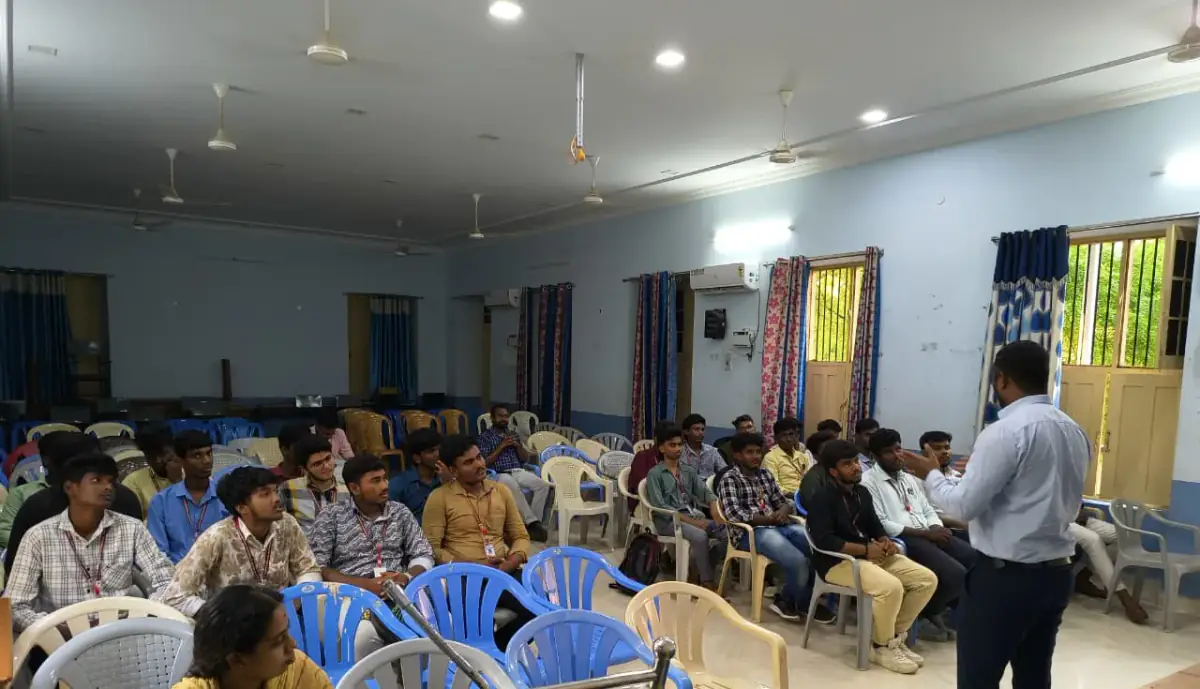
When students hear “NGO management”, they often picture something softer than real management: good intentions, a bit of organising, a lot of goodwill. After seventeen years with TOSS Charitable Trust, the volunteer organisation I founded in Tiruchirappalli in 2009, I think the opposite is true. Running a volunteer organisation is management with the safety nets removed. Here are five lessons it has taught me.
1. You cannot pay people, so you must give them a reason
In a company, salary covers a multitude of managerial sins. People turn up even when the work is dull and the manager is unclear, because the job pays. Volunteers do not have that reason. If the work stops making sense to them, they simply stop coming.
That forces a discipline every manager should have anyway: explaining why. At TOSS, a volunteer who understands that the Talent Fest is the one day in the year a differently-abled child gets a stage of their own will work through the night to set it up. The same is true in a firm. Purpose is not a slogan; it is the answer to “why should I care about this task?”
2. Responsibility grows people faster than instructions
Our campaigns are planned and run by young volunteers, most of them college students. Handing a nineteen-year-old the responsibility for a district-level event feels risky. It is also the fastest way I know to develop someone. People rise to responsibility they have genuinely been given, provided someone is there to support them when it goes wrong.
Businesses talk about empowerment, but often keep the real decisions at the top. Volunteer organisations cannot afford to; there are not enough people at the top. The lesson travels well: delegate the outcome, not just the task.
3. A campaign is a project, and projects need structure
Goodwill does not plant trees or run a sports meet. Every TOSS campaign — Operation Oxygen, Clean Cauvery, the Talent Fest — runs on the same skeleton: a clear objective, a date, a budget, named owners for each part, a checklist, and a debrief afterwards. That is project management, whatever we call it.
Students who think NGO work is unstructured are often surprised, when we study non-profits in class, by how much of the work is planning, budgeting and reporting. Those are not bureaucratic extras. They are what lets a small organisation do the same good work reliably, year after year.
4. Trust is your only real capital
A volunteer organisation lives on trust: from donors, from the families it serves, from the institutions that lend it halls and grounds, and from the volunteers themselves. Trust is built slowly — by keeping accounts transparent, by doing what you said you would, by thanking people properly — and lost quickly.
Companies have brands, contracts and market power to fall back on. But the underlying truth is the same: reputation is built from many small promises kept.
5. Continuity is harder than starting
Starting something is exciting. Keeping it going for twelve editions, as the Talent Fest has, is a different challenge altogether. Volunteers graduate, move cities and start jobs. Every year, knowledge walks out of the door.
The organisations that last are the ones that write things down, train their successors early, and build roles that survive the people in them. That is succession planning and knowledge management, two topics business students meet in textbooks and NGOs live every day.
Why I bring this into the classroom
I encourage my students to volunteer, not because it looks good on a CV, but because there is no better laboratory for management. In a few months with a volunteer organisation you will motivate people without money, plan with tight budgets, handle a crisis on the day of an event, and learn what it takes to earn people’s trust. Those are the skills every organisation needs, and they are learned best by doing.
If you would like to volunteer with TOSS, see how to get involved.
Common questions
What can business students learn from NGO management?
How to motivate people without money, plan with tight budgets, run events and campaigns as projects, handle crises on the day, build trust with donors and communities, and keep an organisation going as people move on.
How do you motivate volunteers?
By giving them a clear reason the work matters and genuine responsibility for an outcome, with support when things go wrong. Volunteers stay when the work makes sense to them and they feel trusted.
What is TOSS Charitable Trust?
TOSS Charitable Trust is a youth-led volunteer organisation founded by Inigo Papu Vinodhan in Tiruchirappalli in 2009. It works with differently-abled children, readers and the environment, through campaigns such as the annual Talent Fest, Operation Oxygen and Clean Cauvery.